
How to Choose the Right White Paint for Your Florida Home
Quick Answer
The right white paint depends on your home's natural light, flooring, furniture,
countertops, trim, and the undertones already in the room. Warm whites can feel
softer and more comfortable, while cooler whites can create a cleaner, crisper
appearance. In a bright Florida home, strong sunlight can also make the same
white look completely different from one room to another. Always test the color in
the actual space before making a final decision.
She Had Six White Paint Samples on the Wall
A homeowner in Port Saint Lucie wanted to repaint most of the inside of her house.
She knew exactly what she wanted.
White.
Simple enough.
Then we walked into the living room.
There were six white paint samples on the wall.
One looked slightly yellow.
Another looked gray.
One almost had a hint of blue.
Two looked nearly identical.
The last one looked great beside the window but completely different across the
room.
She laughed.
"I thought choosing white was supposed to be easy."
That's usually when people discover the problem with white paint.
There really isn't just white.
White Paint Has Undertones
Pick up several white paint samples and put them beside each other.
That's when you start seeing it.
One is warmer.
One is cooler.
One leans slightly creamy.
Another has a gray undertone.
Some whites can even show subtle green, pink, or blue depending on what
surrounds them.
Those undertones aren't necessarily a problem.
They're part of what makes one white feel comfortable in a room while another
feels completely wrong.
When we're discussing colors for an interior painting project in Port Saint Lucie, we
don't want to look at the wall color by itself.
We look at the room around it too.
Florida Sunlight Can Be Brutally Honest
We get plenty of bright days in Port Saint Lucie.
That's wonderful until you realize the afternoon sun is exposing an undertone you
never noticed in the paint store.
A white that looked soft under artificial lighting may appear much brighter near a
large window.
Another white might look warm in the morning and cooler later in the day.
The paint hasn't changed.
The light has.
We've talked about this effect in our guide on why paint looks different on
This matters with every color.
With white, it can be especially noticeable because the differences are subtle.
Look at Which Direction the Room Faces
Not every room in your house receives the same light.
A room getting strong natural light can handle white differently from a shaded
bedroom.
And even within one room, the wall across from a window may look different from
the wall beside it.
That's why choosing one white from a tiny card at the store can be risky.
You haven't seen what that color does in your house yet.
Bring the sample home.
Put it where the paint will actually live.
Then give it a full day before making up your mind.
Your Flooring Gets a Vote
This is one of the first things we look at.
Tile.
Wood.
Luxury vinyl.
Carpet.
Whatever is staying in the room needs to work with the new paint.
Suppose you have warm beige tile throughout the house.
A very cool white on the walls may create a contrast you weren't expecting.
Sometimes it works beautifully.
Sometimes the wall suddenly looks blue while the floor looks more yellow.
Neither color is necessarily bad.
They simply may not belong together.
A warmer white can sometimes create a smoother transition.
Countertops Matter Too
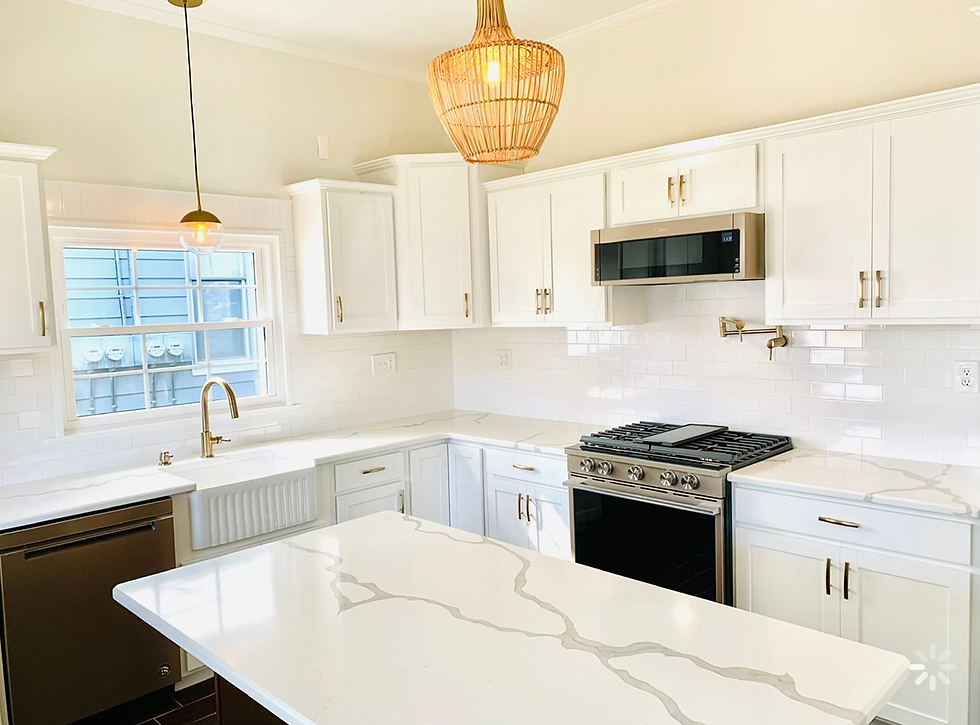
Kitchens are where choosing white can become interesting very quickly.
You might already have several whites in the room.
Cabinets.
Countertops.
Backsplash.
Appliances.
Ceiling.
Trim.
Then you introduce another white on the walls.
Put two slightly different whites beside each other and suddenly their undertones
become much easier to see.
If your countertops are staying, bring the wall sample right up to them.
Do the same with the backsplash.
Don't choose the paint in isolation.
Existing Trim Can Change the Wall Color
Let's say your trim is a bright, crisp white.
Then you paint the walls a warmer white.
The wall may suddenly look creamier than you expected.
Reverse the situation and the trim can start looking yellow beside a cooler wall.
This doesn't mean the walls and trim must match.
Contrast can be beautiful.
It just needs to look intentional.
If you're repainting both surfaces, our guide on whether you should paint the walls
or trim first can help you plan the order of the project.
Color decisions and painting order are two separate conversations, but both are
worth having before work begins.
Don't Forget the Ceiling
Here's another white hiding in the room.
Look up.
A lot of homeowners have white ceilings, but the ceiling white may not match the
new wall white.
Sometimes that's perfectly fine.
Other times the difference becomes obvious after the walls are finished.
You also don't automatically have to keep the ceiling white.
We've covered some of those options in our guide on whether the ceiling should
be the same color as the walls.
A soft white used across both surfaces can create a very calm, continuous look.
Warm Whites Can Make a Home Feel Comfortable
Warm whites often have creamy, beige, or subtle yellow undertones.
They're especially useful when the rest of the home already contains warm
materials.
Wood flooring.
Natural stone.
Cream upholstery.
Warm tile.
Wood cabinets.
The white keeps the space bright without feeling overly sharp.
For some Florida homes, that softer appearance works beautifully with all the natural light coming through the windows.
Cooler Whites Create a Different Feeling
Cooler whites can lean slightly gray or blue.
They can feel crisp and clean, particularly in homes with cooler finishes.
Think gray flooring.
Cool stone.
Black accents.
Modern furniture.
Again, we're talking about undertones.
The wall doesn't necessarily look blue.
But put that same white beside a warm cream cabinet and you may suddenly
notice the difference.
Context changes everything.
Don't Pick a White Because You Saw It Online
This happens all the time.
Someone sees a beautiful room online.
They find the paint color.
They buy it.
Then they put it on their wall and wonder what happened.
The online room had different windows.
Different flooring.
Different furniture.
Different artificial lighting.
Possibly professional photography and editing too.
Your house is your house.
Use online photos for ideas.
Don't treat them as a guarantee.
Sample More Than One Wall
If possible, don't test the color in only one tiny spot.
Put samples where the lighting changes.
Near a window.
Across from the window.
Beside the trim.
Near the flooring.
Then check them throughout the day.
We've seen a white look perfect on one wall and surprisingly warm on another.
That's not unusual.
The room is simply showing you how the color responds to different conditions.
Paint Finish Changes White Too
Color gets most of the attention, but finish matters.
Flat and matte surfaces reflect light differently from eggshell or satin.
The same white can appear slightly different when the sheen changes.
And different rooms have different practical needs.
A quiet bedroom isn't dealing with the same conditions as a bathroom or kitchen.
Our guide on the best paint finishes for kitchens, bathrooms, bedrooms, and living
rooms explains how to think about those choices.
Don't choose a white and forget about the finish.
They're part of the same final appearance.
White Can Show Wall Problems
Going lighter can make a room feel wonderfully fresh.
It can also introduce you to dents you apparently never noticed before.
Small holes.
Old patches.
Uneven texture.
Repairs around outlets.
Strong Florida daylight can make these imperfections easier to see.
Before repainting, take a close look at the surface.
Our guide on how to know if your walls need repair before painting covers what
homeowners should watch for.
Fresh paint looks much better when the wall underneath is ready for it.
Going From Dark to White May Take More Work
Imagine a deep blue bedroom becoming soft white.
That's a substantial color change.
Depending on the existing surface, paint product, and colors involved, primer or
additional finish coats may be appropriate.
Our guides on why primer matters in some painting projects and whether you
really need two coats of paint explain those situations in more detail.
The goal is consistent coverage.
Not seeing how far one roller load can stretch.
Should the Whole House Use the Same White?
It can.
Using one white throughout several connected spaces can create continuity.
But you don't have to force one color into every room if the lighting changes
dramatically.
The white that looks beautiful in the bright living room may feel completely
different in a shaded bedroom.
Sometimes consistency works.
Sometimes adjusting the color slightly gives each room a better result.
Look at the entire home before deciding.
Frequently Asked Questions
What is the best white paint for a Florida home?
There isn't one universal best white. The right choice depends on natural light,
flooring, furniture, countertops, trim, and the overall style of the home.
Is warm white or cool white better?
Neither is automatically better. Warm whites often work well with beige, wood, and other warm finishes, while cooler whites can complement gray, black, and
cooler materials.
Why does my white paint look yellow?
The paint may have warm undertones, or surrounding colors and lighting may be
making those undertones more noticeable.
Why does white paint look blue in some rooms?
Cool natural light, artificial lighting, surrounding finishes, or the paint's undertones
can cause a white to appear slightly blue or gray.
Should I test white paint before painting the whole room?
Yes. Testing the color in the actual room and viewing it throughout the day can
help prevent surprises.
Final Thoughts
That Port Saint Lucie homeowner eventually narrowed six whites down to two.
Then we looked at them again in the afternoon.
One was gone immediately.
The winner wasn't the whitest white.
It wasn't the most popular color online either.
It was simply the one that worked with her flooring, trim, furniture, and the Florida
light coming through her windows.
That's really the trick.
Don't ask which white everybody else is using.
Ask which white works in your house.
Bring samples home.
Look at them in the morning.
Look again in the afternoon.
Put them beside the things that aren't changing.
And don't rush because you're tired of looking at little white squares.
Choosing white can take longer than expected.
But once you find the right one, the room suddenly makes sense.
For walls, ceilings, trim, bedrooms, kitchens, living rooms, and complete indoor
color changes, explore Pro G Painters' Interior Painting Services.
If you're also considering a lighter color for the outside of your home, learn more
And if you've reached the point where every white sample looks exactly the same,
contact Pro G Painters to discuss your painting project.


